


ProMetronics builds an end-to-end asbestos detection pipeline with CVAT Online


ProMetronics is a German industrial AI company that develops a no-code analytics platform combining 3D microscopy with machine learning to automate quality inspection and detect microscopic anomalies for labs and manufacturers.

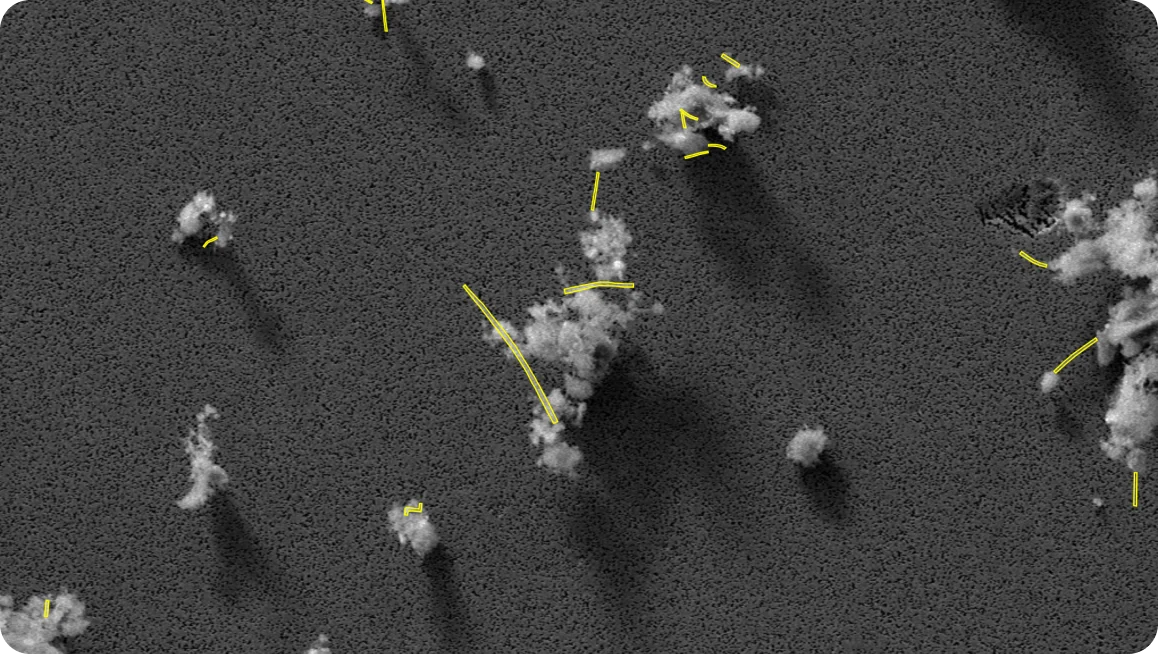
In Europe asbestos testing labs must individually confirm fibers as thin as 100 nm across hundreds of SEM images per sample. The work is repetitive, takes hours per sample, and is hard to scale.
CVAT Online integrated via API into the ProMetronics platform as the annotation backbone, enabling automated image push, label retrieval, and real-time task monitoring.
~100,000 asbestos fibers annotated and a production-ready detection model deployed into customer labs in Germany, with a pipeline that generates compliance-ready reports automatically and scales to ~300 accredited labs across Europe.
The challenge of asbestos testing at scale
Asbestos is among the most heavily regulated materials in industry, and also one of the hardest to measure reliably. A single analyst at an accredited lab is expected to review hundreds of scanning electron microscope (SEM) images per sample, individually confirming the presence of fibers that are routinely micron-thick and sometimes as thin as 100 nanometers.
The work is repetitive and unforgiving. Missing a fiber is not a quality issue — it is a compliance failure. And the volume of images makes consistent manual review nearly impossible to sustain.
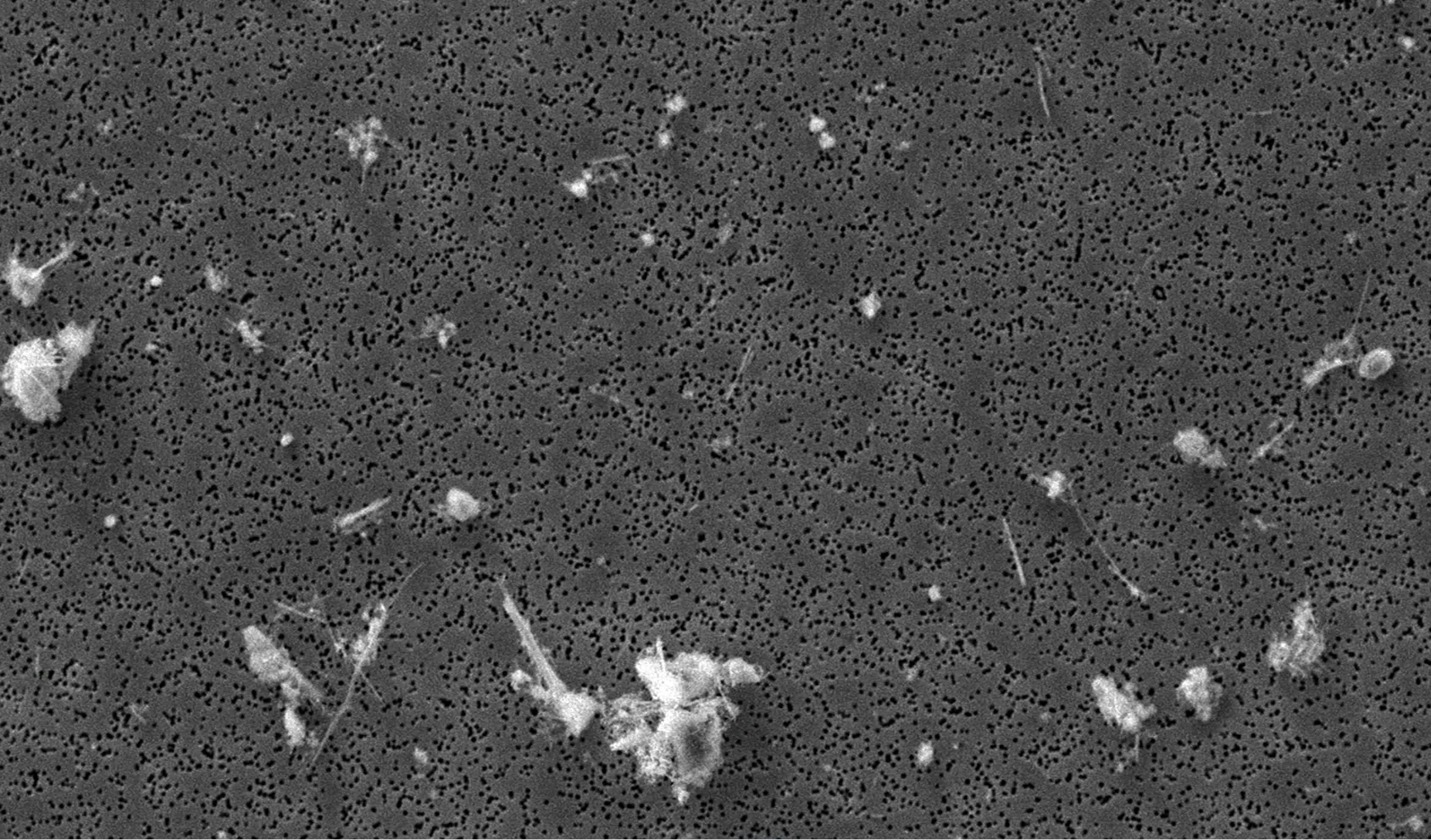
Germany alone has roughly 100 asbestos-testing labs; Europe has around 300. Every one of them faces the same bottleneck: a human operator searching SEM tiles for something both hazardous and nearly invisible at scale.
ProMetronics saw the same pattern across earlier custom AI projects — annotation workflows disconnected from training, pipelines that broke at handoffs, no unified environment to manage it all. Rather than solving those problems one client at a time, the team built a platform to eliminate them entirely. Asbestos detection became its first production use case.
How CVAT fits into the ProMetronics pipeline
The ProMetronics pipeline starts when a lab sample arrives: the sample is prepared and loaded into a microscope, which captures around 1,000 images per job and up to 10,000 images per full sample batch. Those images are uploaded to ProMetronics' dataset hosting — and that's where CVAT comes in.
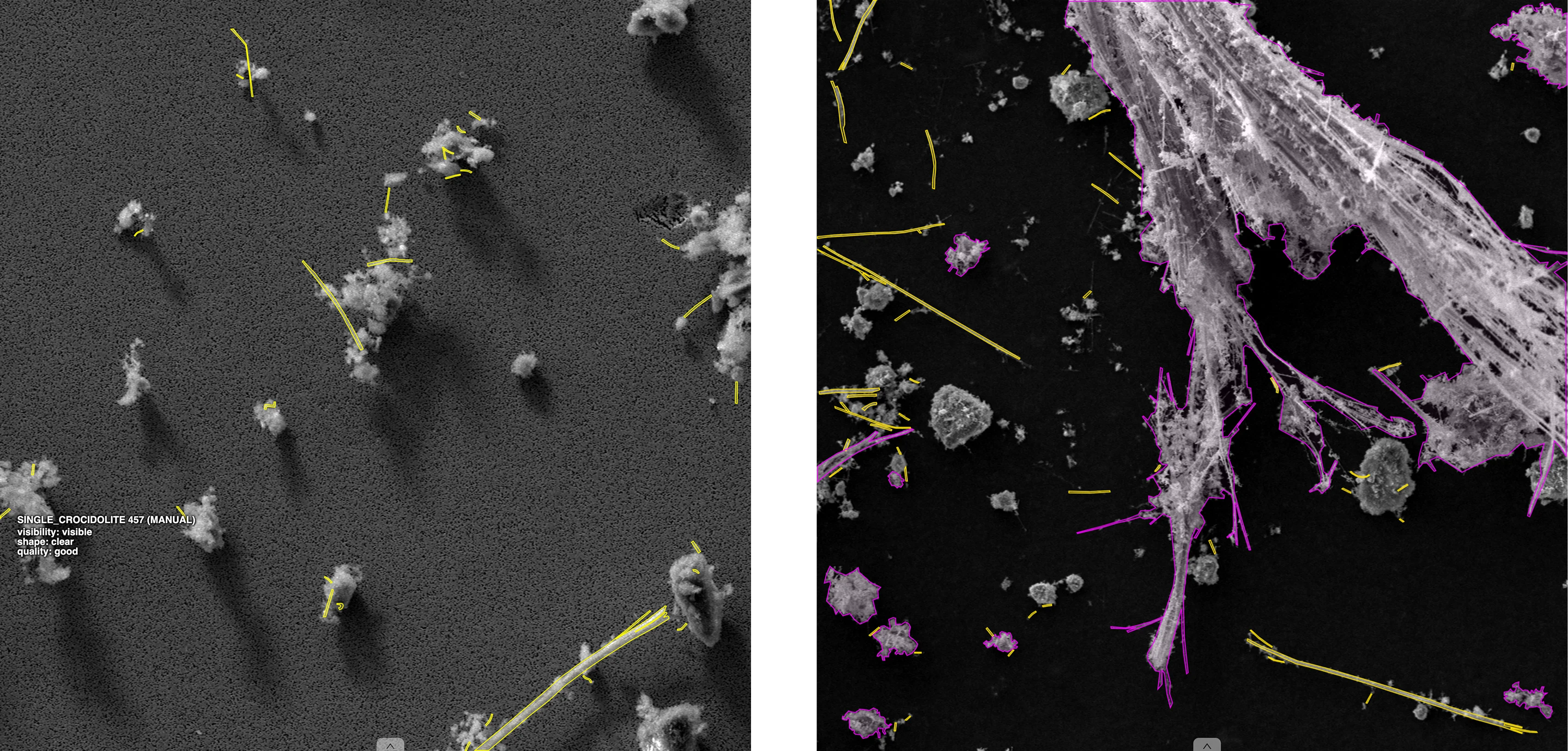
Images are batched into projects and tasks inside CVAT Online. A dedicated annotation team works through the labeling load at polygon precision, while ProMetronics' in-house specialists run quality control using CVAT's built-in review-and-rework workflow. Once annotations pass review, they flow back into ProMetronics via the CVAT API and feed the training pipeline directly.
ProMetronics doesn't build its own annotation UI. CVAT sits behind a thin pipeline layer inside the platform, meaning a lab customer never needs to learn or interact with it — they see dataset management, training, and inference, with annotations moving through in the background.
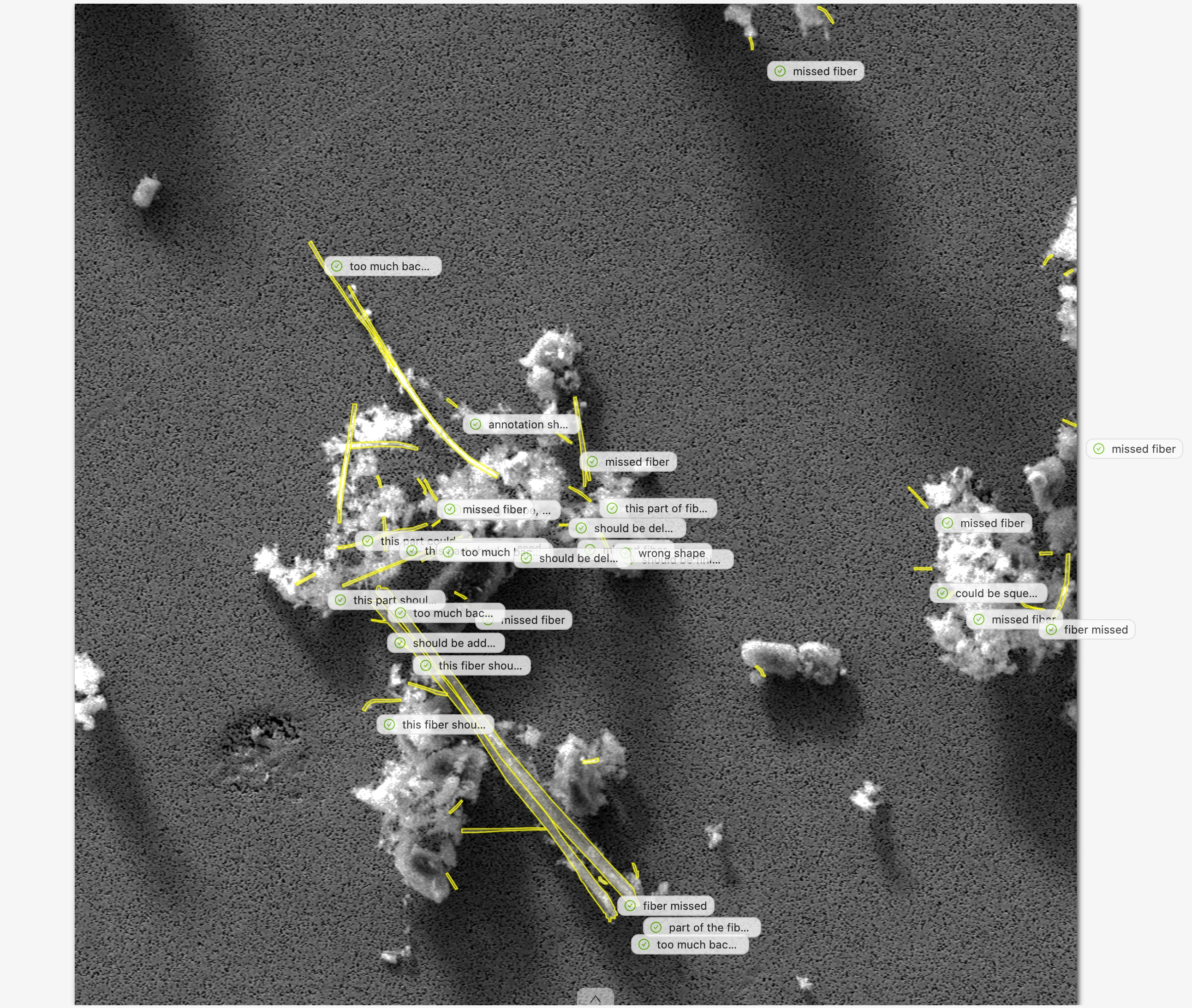
Beyond labeling, ProMetronics also uses the CVAT API as a live coordination signal. The German engineering team reads task status, job progress, QC state, and label counts directly from the API into their internal dashboard which gives them a real-time view over the annotation team's output without opening CVAT itself.
Why choose CVAT Online?
Three things kept ProMetronics on CVAT once they made the switch. The tool is productive out of the box, which matters when embedding it into someone else's platform rather than using it standalone. The review-and-rework stages are practical for a distributed team coordinating across time zones. And the API is robust enough to treat as infrastructure, not just a convenience, which is what ProMetronics needed to build its internal dashboard on top of.
"I love CVAT because it's so hands-on: working with it is easy to understand and easy to do. We tried other tools before, but we had a lot of friction getting them running and the UI was harder to work with."
Andre Kempe,
CEO & Product Owner, ProMetronics
Because CVAT is the de facto annotation tool for computer vision teams, ProMetronics can also onboard new annotation partners quickly since they almost always already know the workflow.
A working model, ready for the European market
The results of the ProMetronics platform , with CVAT Online as its annotation backbone, are tangible. Approximately 100,000 asbestos fibers have been labeled at polygon precision across 30+ tasks and thousands of SEM images. A production Vision AI model has been trained, validated, and deployed into customer labs.
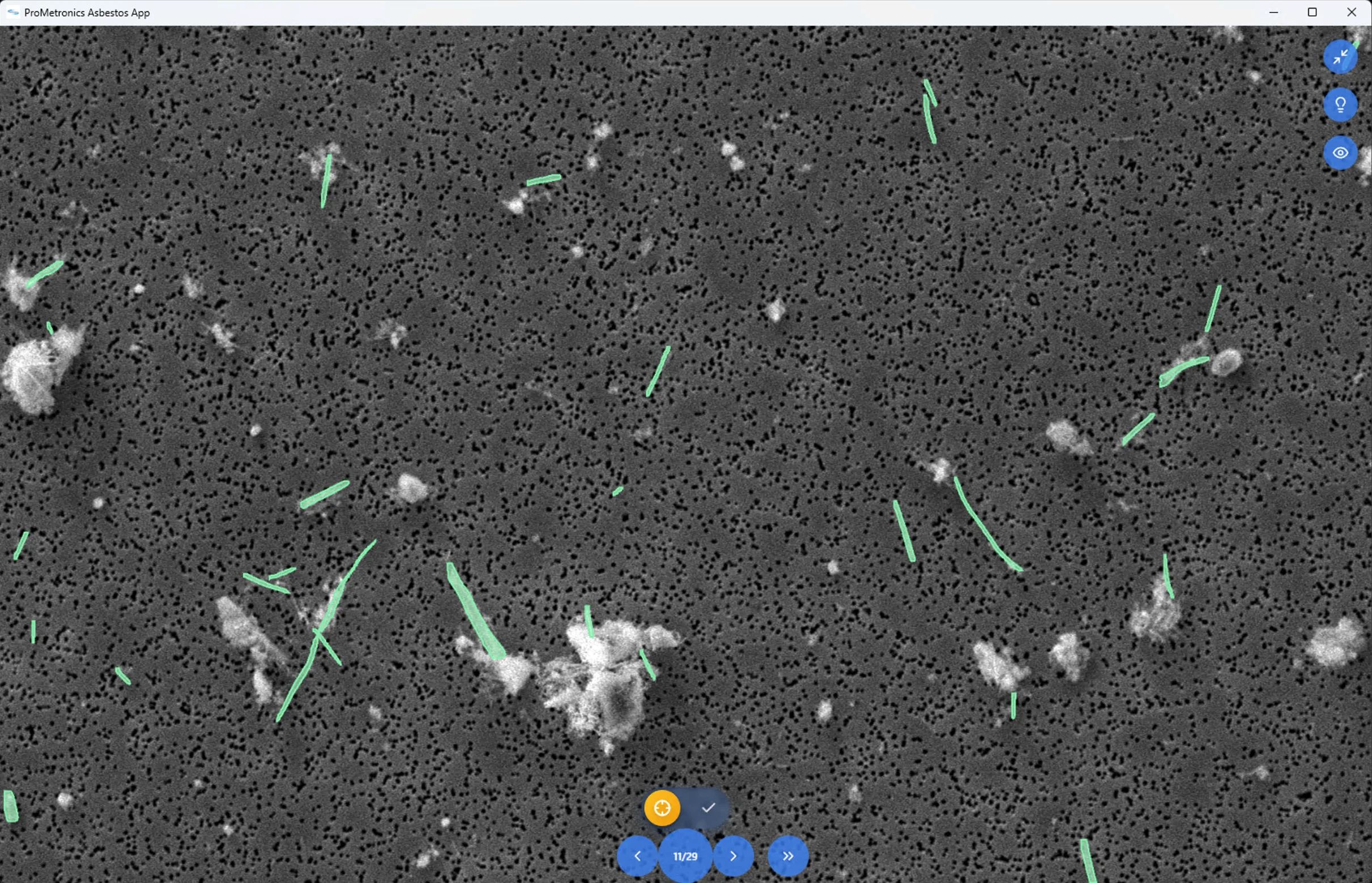
For the labs using the platform, the end product is not an AI system. It is a turnkey workflow: a sample goes in, a compliance-ready report comes out, with fiber counts and dimensions — matching the format labs already use under regulatory pressure. The AI runs behind the electron microscope interface the operator already works with.
The same pipeline generalizes beyond asbestos. The SEM → CVAT → training architecture applies to any domain that requires finding small, rare objects in high-resolution imagery — technical cleanliness testing, particle detection, and industrial quality control among them.
What's next for ProMetronics
ProMetronics' platform is production-ready and targeting the full European market: 100 testing labs in Germany and approximately 300 across the continent. The same annotation-to-inference pipeline that powered asbestos detection is already being extended to technical cleanliness and particle analysis workloads, with waveform and audio analytics on the roadmap.
On the infrastructure side, the team continues to invest in the pipeline connecting CVAT to its training cluster — automating dataset expansion, streamlining model retraining, and improving the feedback loop between QC annotations and model performance over time.

Explore CVAT Online for cloud-based annotation, CVAT Enterprise for self-hosted deployments, or our Labeling Services for fully managed annotation.





Get Started Today


.svg)
.png)

.png)







.png)