


Jama automates waste contamination detection on collection vehicles with CVAT Online

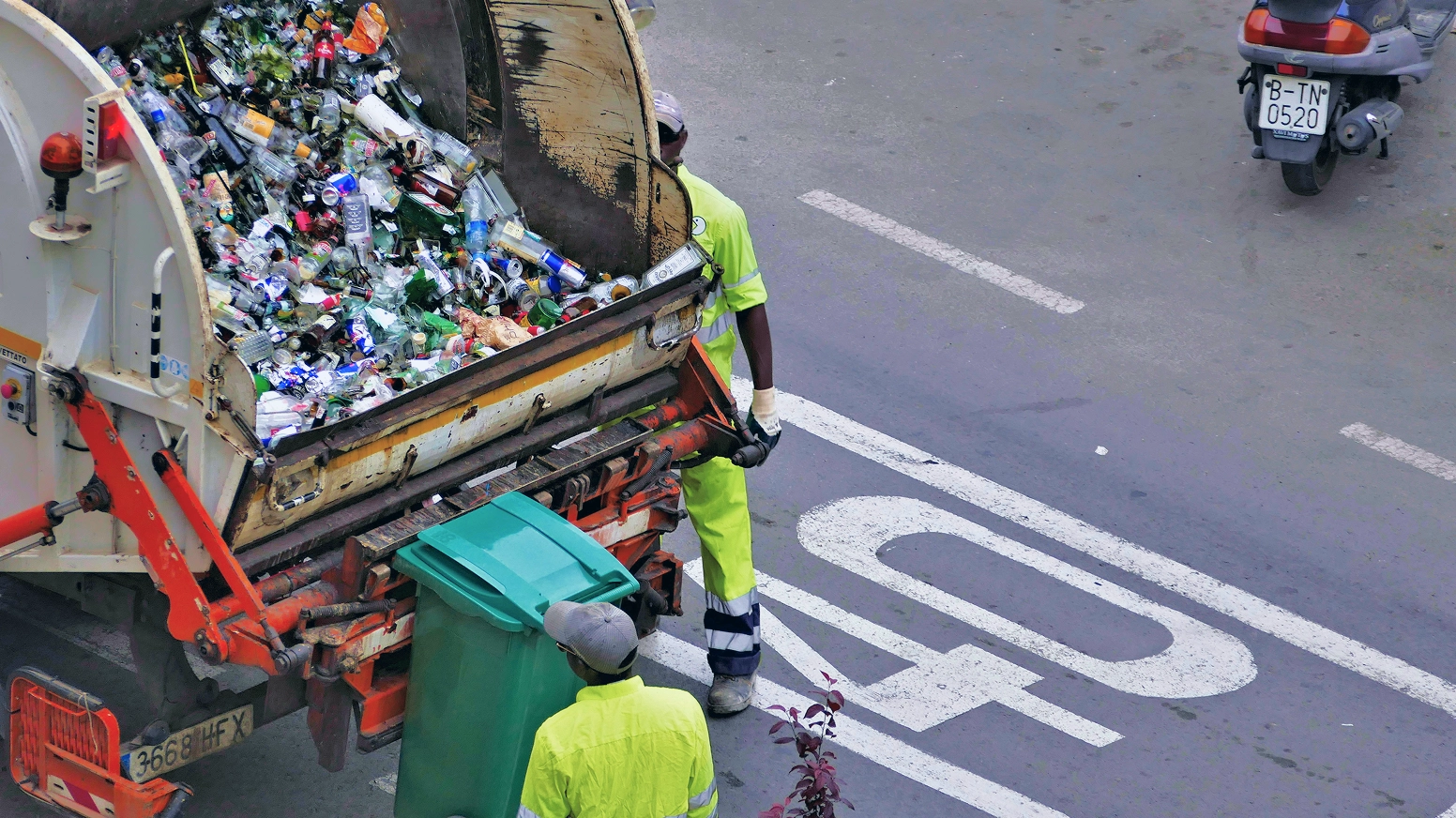

Jama is a Dutch technology company based in Zutphen that has been building RFID identification and tracking systems for waste collection since 1997. Their systems are installed on waste collection vehicles across the Netherlands, logging every container emptying event through their VanManager SaaS platform. Their current computer vision project extends that tracking capability with automated waste fraction classification at the point of collection.

Relying on drivers to manually photograph contamination events produces inconsistent data: different drivers apply different judgment, events are missed, and the task adds a distraction to an already safety-critical job. Municipalities and waste collection companies need objective, per-event data on what goes into each container.
Jama is training a CV model to automatically classify waste fractions in every container during collection. CVAT Online is the annotation infrastructure: one annotator uses SAM 2 to perform instance segmentation at pixel level, a waste-domain expert reviews every label, and the verified dataset is passed to Jama’s technology partner for model training and OTA deployment to the camera fleet.
8,479 annotated images across multiple waste fractions, with model deployment via OTA updates — no physical access to vehicles required. Next phase: automated roadside container detection and missed pickup alerts for drivers in real time.
Every year, European households and businesses generate more than 230 million tonnes of municipal waste. Recycling rates have risen sharply — nearly tripling across the EU since 1995 to reach 48% in 2024 — but volume alone does not determine recycling quality. The fundamental constraint is contamination: plastic found in organic waste bins, recyclables mixed with food residue, wrong materials in wrong containers. When a waste stream is contaminated, it must be sorted by hand, downgraded, or rejected. The EU has set a 65% municipal waste recycling target for 2035, and reaching it requires not just more collection but better data about what is actually in every container.
The Netherlands is among Europe's top performers on municipal waste recycling, with a recycling rate of 54.6% in 2023, already close to the EU's 55% target for 2025. Maintaining and improving that rate requires municipalities and waste collection companies to monitor contamination closely: identifying which areas, which routes, which containers are consistently producing mixed loads, and intervening before the problem compounds. That information starts at the moment of collection, when the contents of each container become briefly visible during the emptying event.
Jama has been building identification and tracking systems for waste collection since 1997. The company's RFID technology is deployed on waste collection vehicles across the Netherlands, logging every container emptying event and linking it to a specific container and household. Six years ago, Jama began integrating cameras into those vehicles, initially allowing drivers to manually photograph contamination with the press of a button. Their current project replaces that manual step entirely: a computer vision model, running directly on a smart camera mounted on each vehicle, classifies the contents of every container as it is emptied — automatically, consistently, and without driver action. CVAT Online is the annotation platform behind the dataset that trains it.
The case for automated contamination tracking
The problem with the manual approach is not that drivers fail to do their jobs. It is that asking them to make a judgment call on every collection event makes objectivity structurally impossible. "If we let the driver make that determination, we become dependent on their personal judgment," says Roy Hekkert, IT Consultant at Jama. "One driver may assess the situation differently from another, which means you can never obtain a truly objective view."
Automation resolves that inconsistency entirely. A camera that captures and classifies every container emptying event does not vary by driver, by time of day, or by how busy the route is. The result is objective, per-event classification data that is consistent across the fleet, which is what lets municipalities understand contamination rates by area, by container, and by household rather than by which driver happened to be paying attention.
Driver safety is a second motivation. Pressing a button and taking a photo while operating a waste collection vehicle, however briefly, is a secondary task that diverts attention from the road. Jama's goal is to remove that requirement entirely: the camera handles the observation, the driver handles the driving.
Building a dataset from six years of field footage
Jama's cameras have been running on collection vehicles for six years. In that time they have accumulated roughly 100,000 images of container emptying events, captured across the Dutch waste collection network in real operating conditions: different container types, different waste fractions, varying lighting, and all four seasons.
Not all of those images are suitable for training. Heavy motion blur during the emptying event, and dust accumulation on the lens, both degrade image quality below the threshold where annotation is reliable. Rather than running a separate preprocessing step, Jama's team identifies and removes these images directly inside CVAT Online as they encounter them during the labeling process. The working dataset is built from what passes that review.
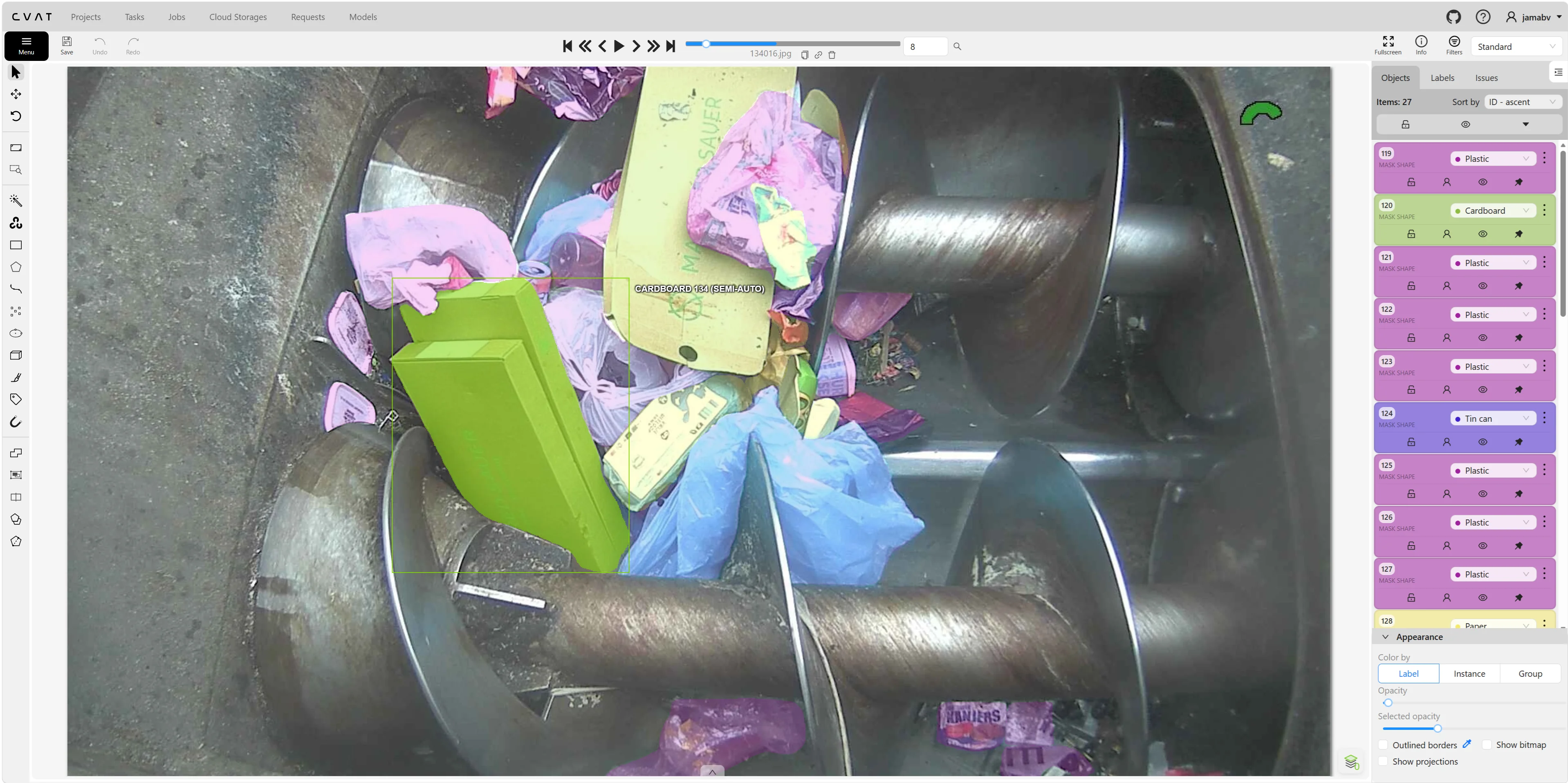
The annotation task itself requires domain expertise. Instance segmentation of waste materials means tracing the pixel-level boundaries of each individual item in the frame: the plastic bag, the organic material, the cardboard. Knowing which fraction is which requires familiarity with how waste actually looks inside a Dutch collection container, not just abstract category definitions.
Jama's annotation team is structured around that requirement. One person handles labeling; a second, with hands-on knowledge of Dutch waste streams and recycling categories, reviews every annotation before it enters the training dataset. "The second person is familiar with all waste streams and verifies whether the labels have been assigned correctly," Roy explains. Every image goes through both before it is considered verified.
How Jama uses CVAT Online
The annotation pipeline works in three stages:
Upload and quality filter. Images captured by the vehicle cameras are uploaded to Jama's CVAT Online project. Frames that are too blurry or dusty to annotate reliably are removed from the task queue at this stage, directly inside CVAT Online, as the team encounters them.
Instance segmentation with SAM 2. CVAT Online's Segment Anything Model 2 (SAM 2) integration generates initial segmentation outlines for each waste item in a frame. The annotator reviews, adjusts, and confirms those outlines at pixel level. The AI handles first-pass contouring; the annotator focuses on accuracy and correction for the cases SAM 2 gets wrong.
Expert review and export. A domain expert reviews each completed annotation. Verified labels are exported from CVAT Online and passed to Jama's technology partner, who handles model training. New model versions are deployed to cameras in the field via OTA updates through the cloud and the vehicle's onboard computer, with no physical access to the truck required.
The workflow converts what would otherwise be an extremely labor-intensive task — outlining waste materials by hand, frame by frame, in thousands of images — into a focused review process. SAM 2 handles the structural work; the team provides the expertise and quality control.
Why choose CVAT Online?
When Jama began the annotation project, they were still relatively new to computer vision. Initial experimentation was with Azure Custom Vision, but it left open questions about whether it was suited to the task. The decision to use CVAT Online was made in partnership with the company that supplies Jama's smart camera hardware and developed the AI application that runs on it — a partner with deep experience in CVAT Online who manages data access and model extraction from Jama's annotation account. Their recommendation carried weight precisely because they are the ones responsible for training and deploying the model.
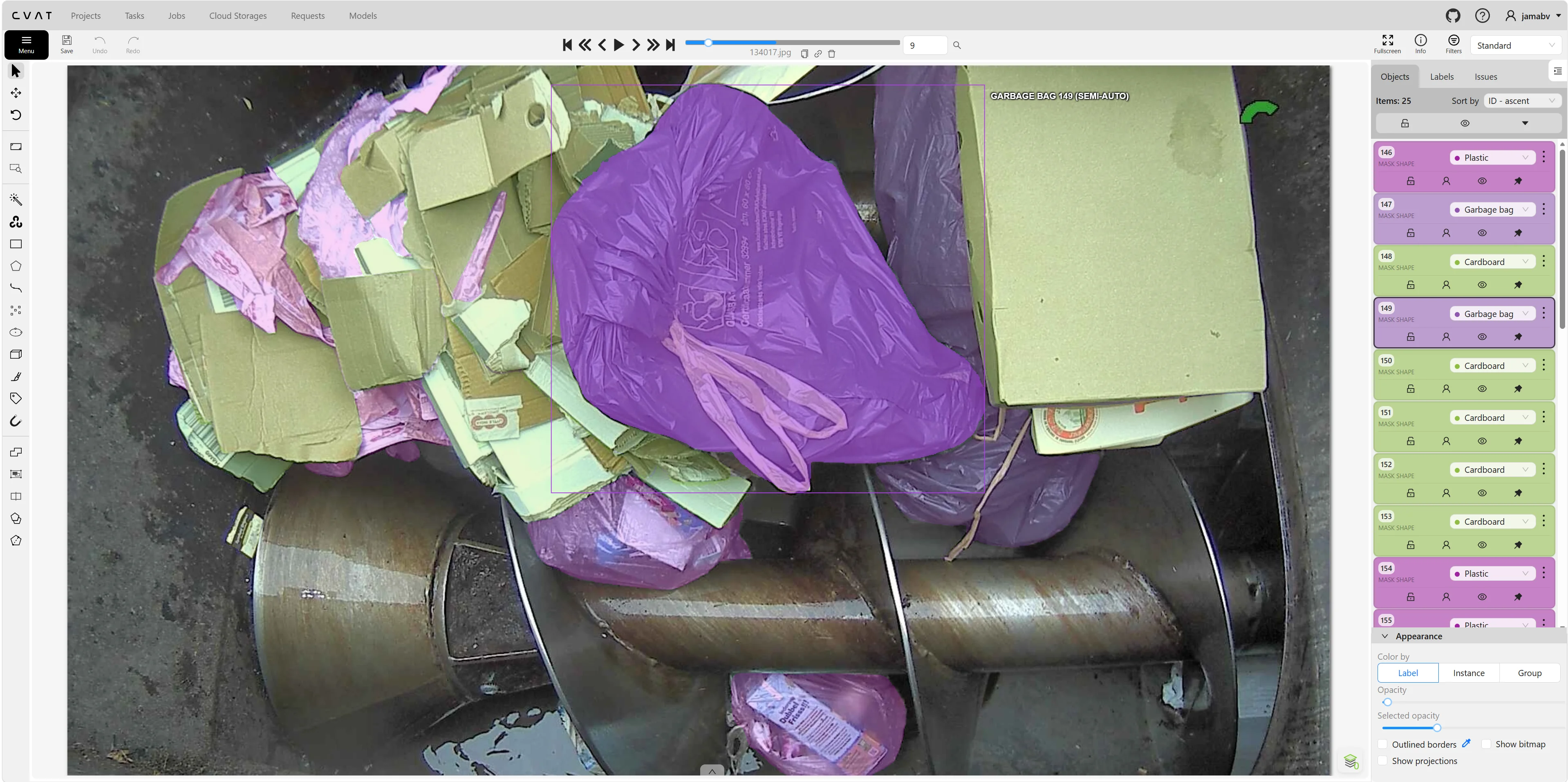
The standout capability has been SAM 2. Instance segmentation of irregular waste materials — the kind where every frame contains different shapes, different overlap, different amounts of each fraction — is exactly the task where AI-assisted first-pass contouring changes the economics of annotation. "The AI tools, and especially Segment Anything 2.0, have been a great asset for us," Roy says. "They enable us to label data quickly and efficiently." For a team of two, that efficiency is not a convenience. It is what makes building the dataset at all feasible.
From annotated frames to the collection vehicle
Jama's deployment architecture runs inference at the edge. The AI model does not send images to the cloud for analysis — it runs locally on the smart camera itself, which is equipped with its own onboard GPU. Each container emptying event is analyzed in real time on the vehicle: the camera captures the image, the model classifies the waste fractions present, and the detection results are transmitted via API to an onboard computer on the truck. There, the detection data is combined with the RFID container record — linking what was found to the specific container and household — and the complete record is synced to VanManager, Jama's cloud platform, where customers can view and act on the data.
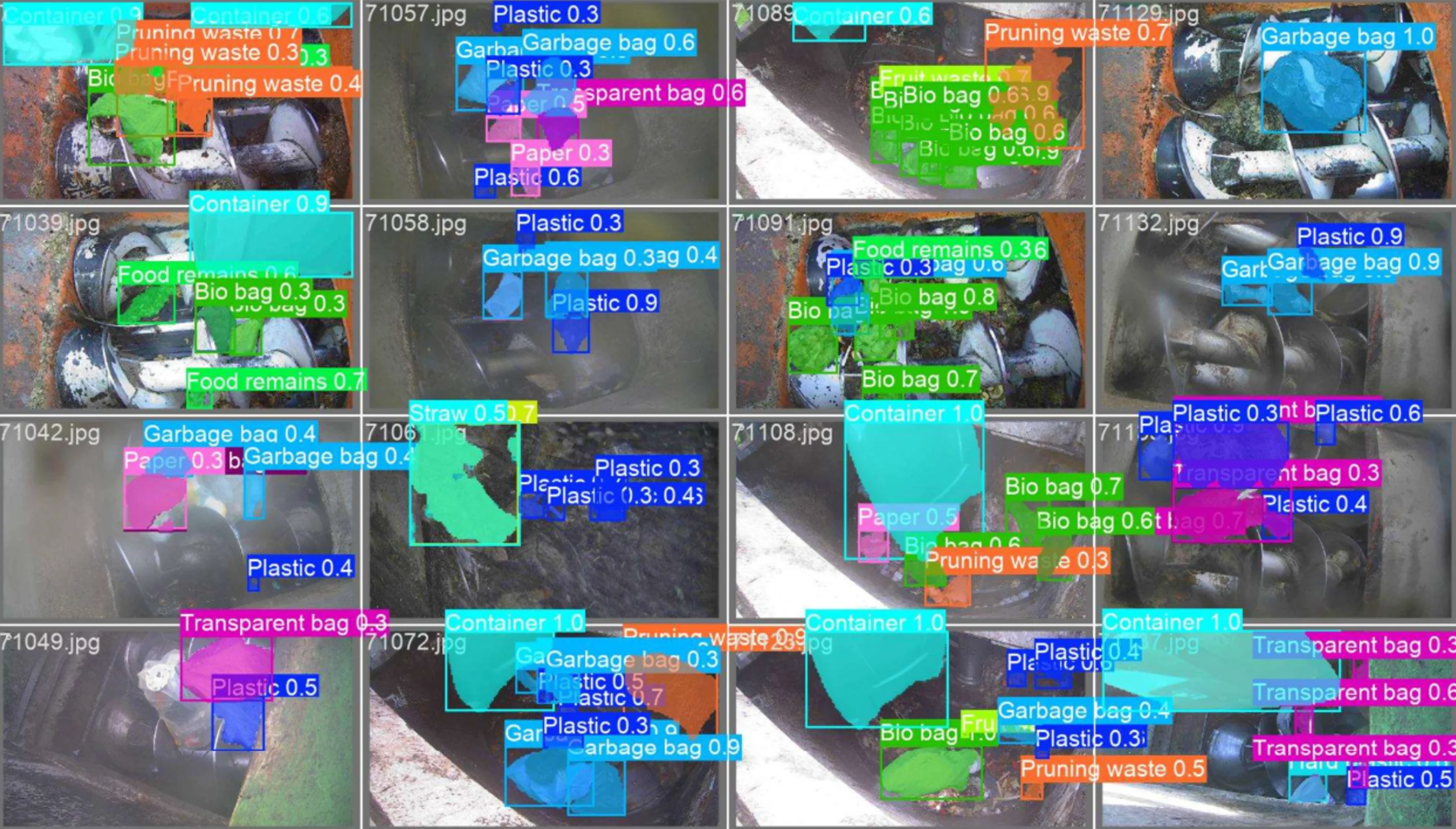
When a new model version is trained and validated, it is pushed to cameras in the field through the cloud connection and the onboard computer API. No physical visits to the fleet are required. The update reaches every vehicle the next time it connects.
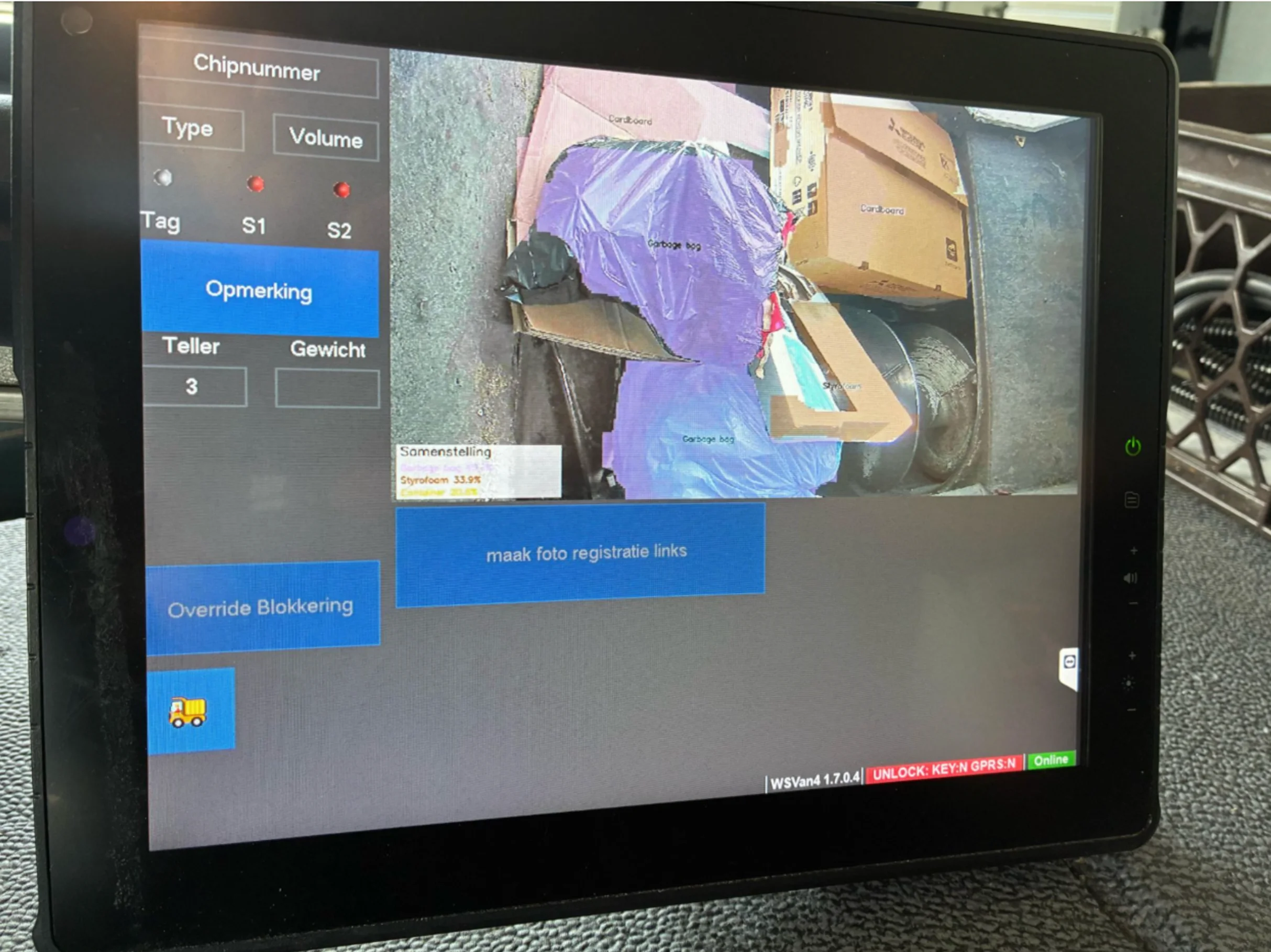
The project is currently in active implementation. The next planned use case extends the same infrastructure to a different problem: detecting containers placed along the roadside before collection, counting them against the containers actually emptied, and flagging missed pickups to the driver in real time. The annotation pipeline built on CVAT Online will support that use case using the same process already established for contamination detection.
Closing the gap between collection and insight
Waste collection has always generated data. RFID systems like Jama's have recorded which containers were emptied, and when, for decades. What has been missing is consistent, objective data about the contents. Contamination monitoring at scale requires visibility into every collection event across the entire fleet — not a sample captured by drivers making individual judgment calls.
Jama is building that visibility with a computer vision system that classifies every container as it is emptied, automatically, and links the classification to the RFID record of the household it belongs to. CVAT Online provides the annotation infrastructure that makes building the training dataset feasible: SAM 2 for efficient instance segmentation of complex waste materials, multiuser access for the annotation-and-review workflow, and flexible export that fits the model training pipeline. As the use case expands from contamination detection to missed pickup alerts, the same pipeline scales with it.

Explore CVAT Online for cloud-based annotation, CVAT Enterprise for self-hosted deployments, or our Labeling Services for fully managed annotation.






Get Started Today


.svg)
.png)

.png)




.png)