What types of logistics data can I annotate in CVAT?
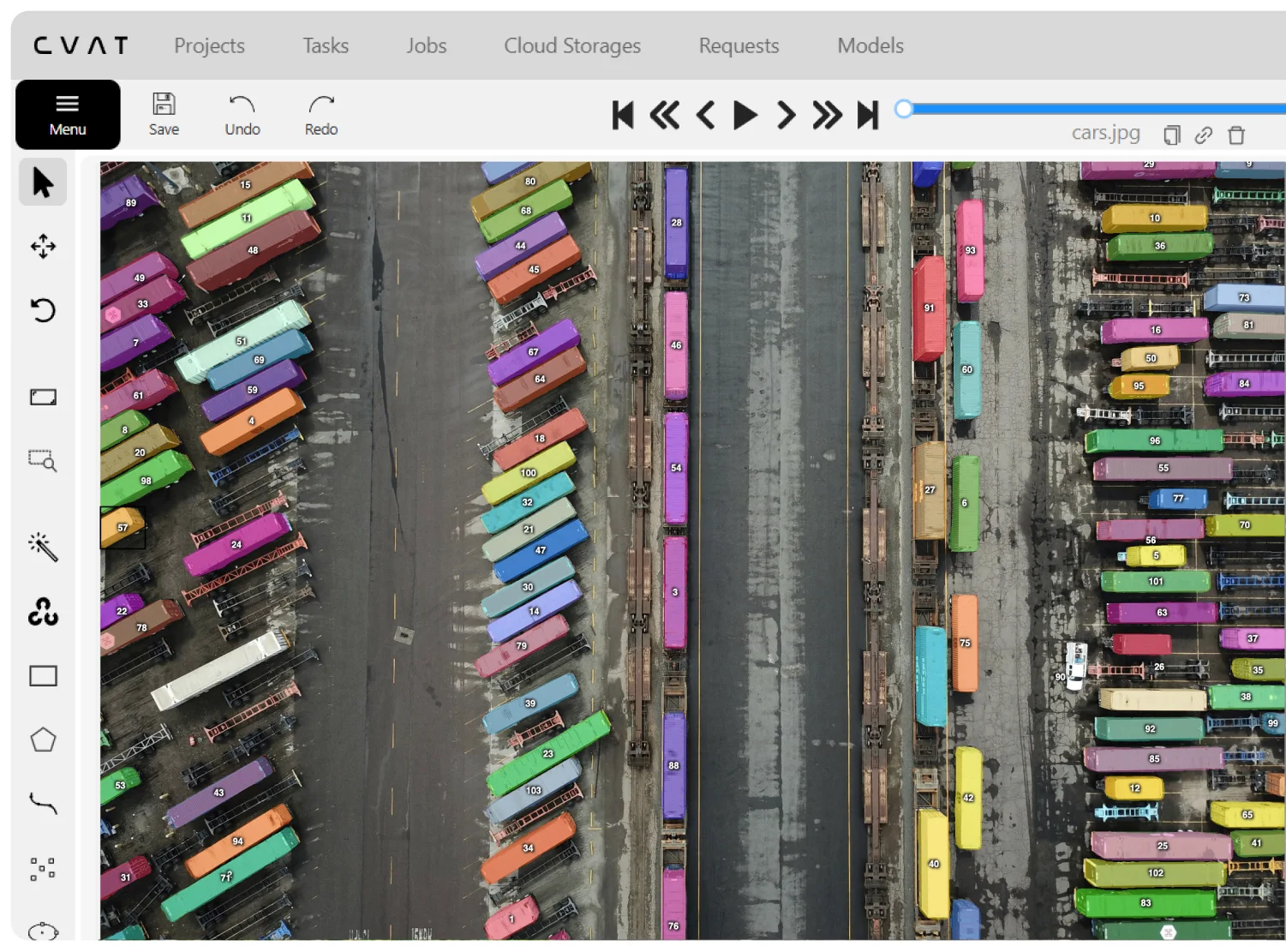
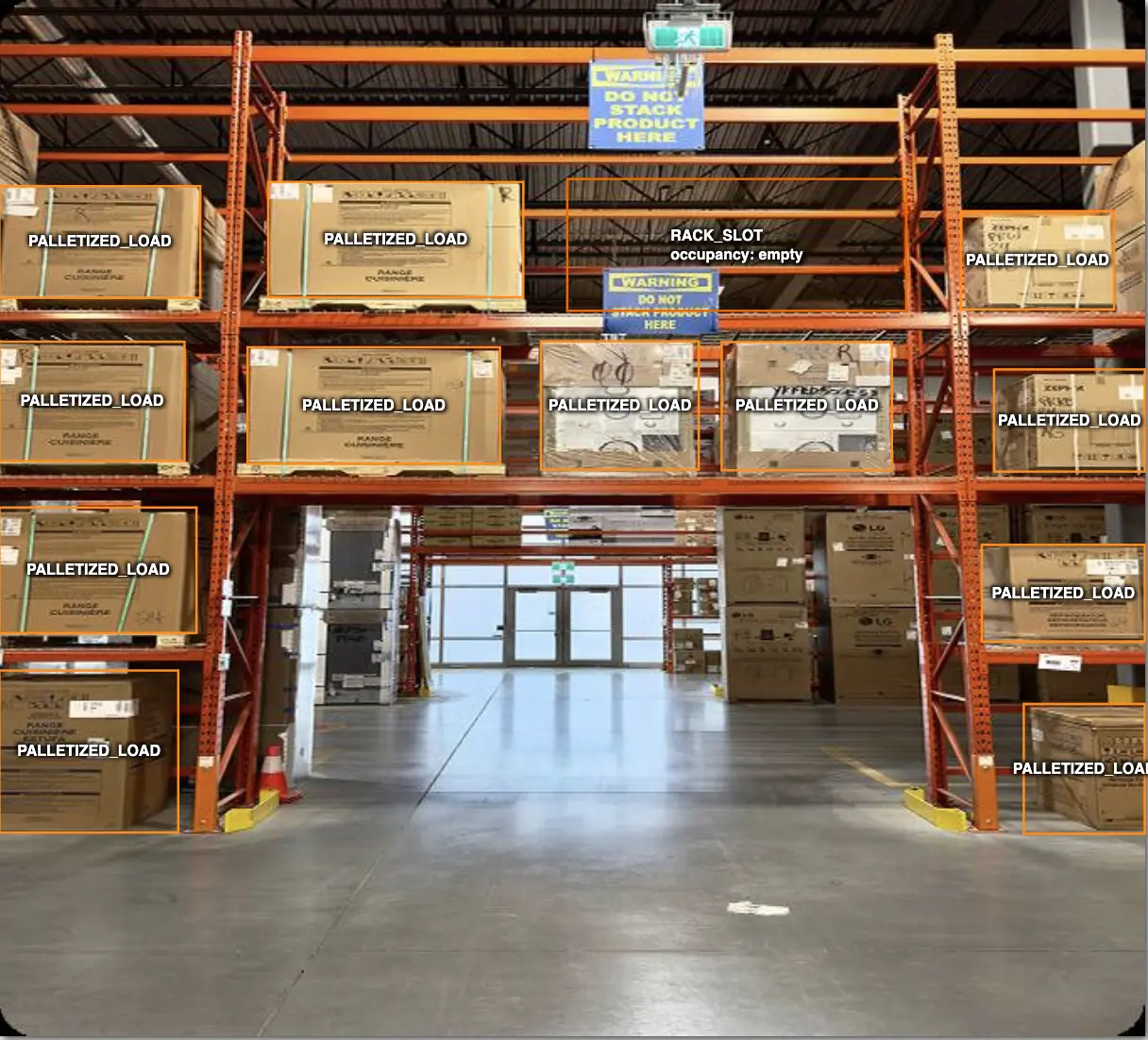
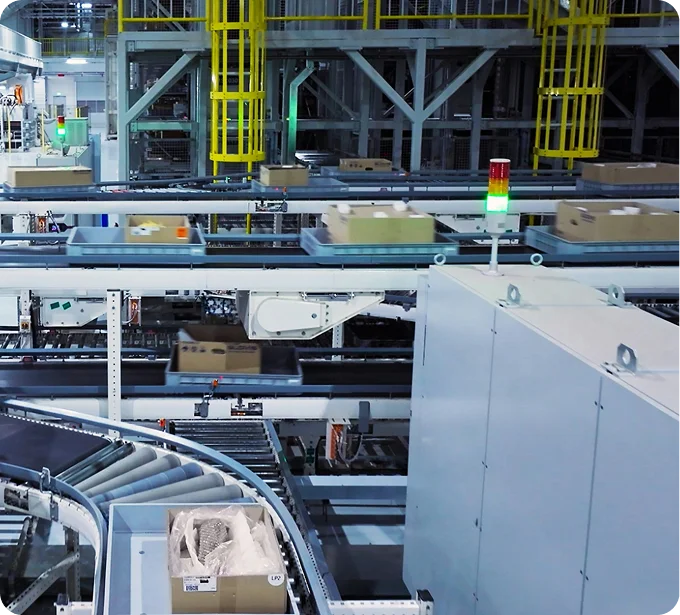
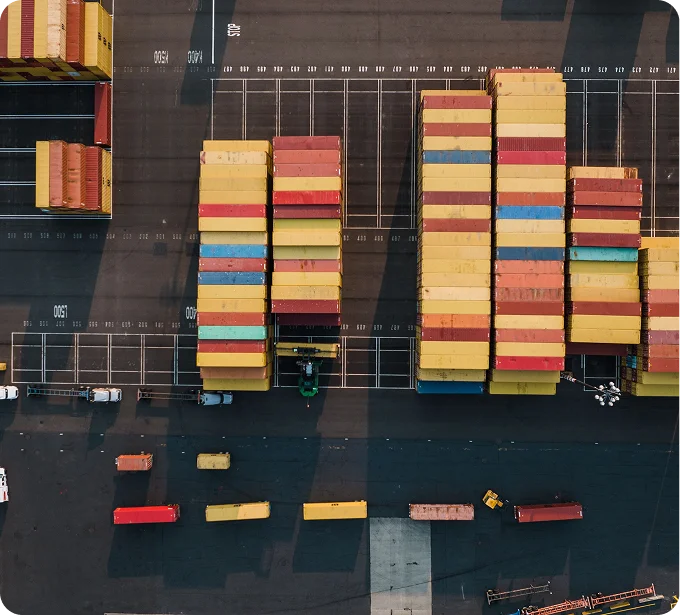
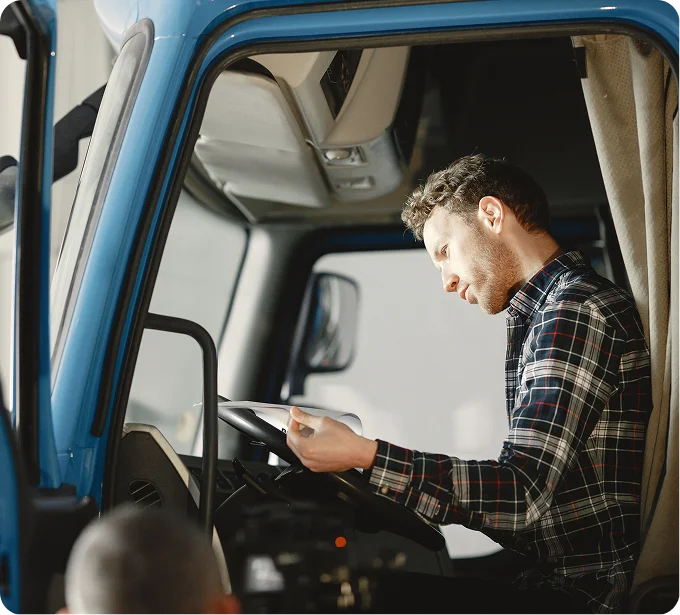
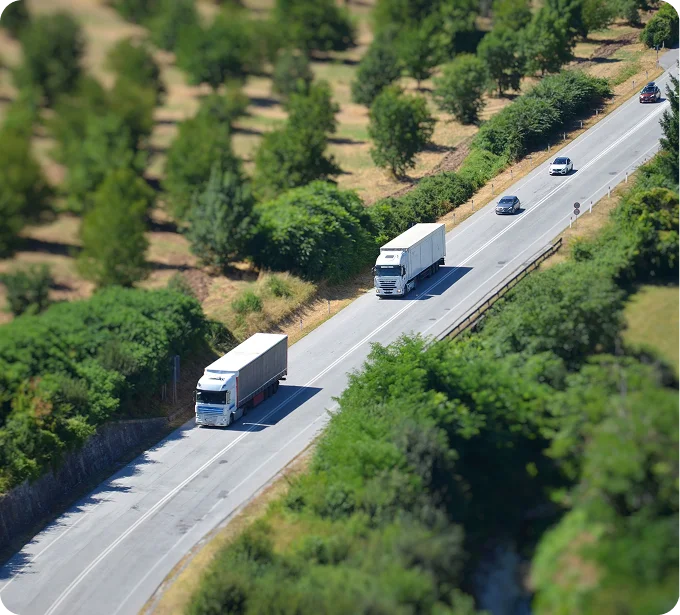
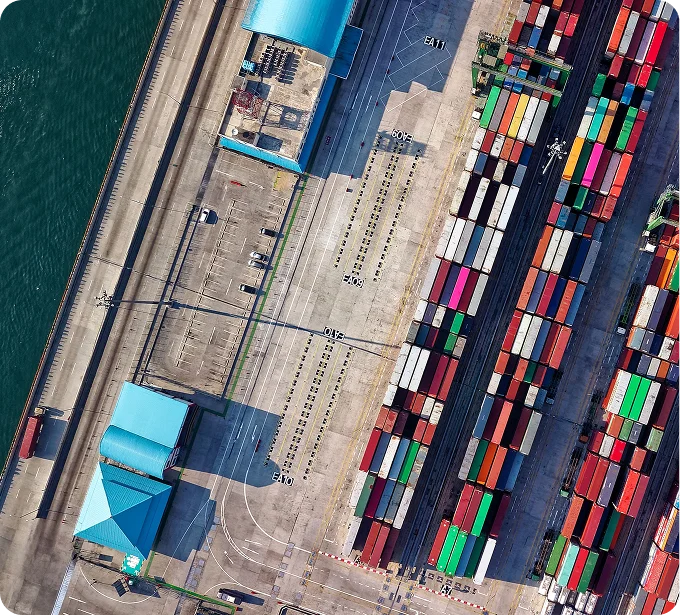
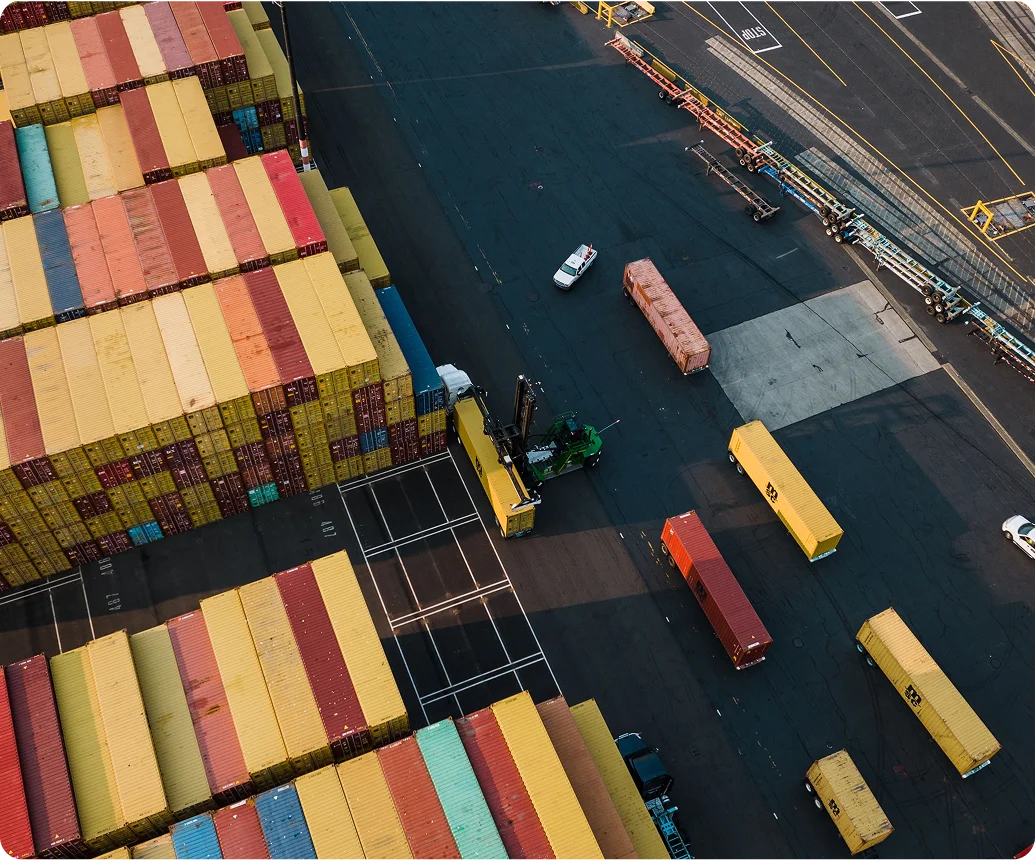
CVAT can be used with fixed-camera and CCTV video, in-cab footage, conveyor and sortation line capture, and still imagery in supported formats. Teams commonly use it to build training data for inventory counting, freight handling, safety monitoring, and traffic analysis.
Can objects be tracked and counted across long recordings?
Yes. Track mode propagates an object across frames and interpolates between keyframes, keeping a consistent identity for the length of the recording. This is what makes reliable counting possible, since double counting and identity switches are the usual failure mode in dense scenes.
Can we capture container or vehicle identifiers alongside the object?
Yes. Object attributes let you record container numbers, licence plates, SKU references, condition, or status as structured fields on the same annotation, so one pass produces both detection and identification training data.
Which annotation types suit warehouse and terminal footage?
Pallets, cartons, containers, and vehicles are usually oriented boxes, since stacked and angled freight rarely sits square to the camera. Storage zones, travel lanes, and dock areas are polygons or masks. Worker pose for safety models uses skeletons and points. Condition and status are attributes on the object rather than separate classes.
Can we pre-label site footage with an existing detector?
Yes. Import predictions or connect a compatible custom model to generate a first pass across a full recording, then have annotators confirm, correct, or reject. Dense warehouse scenes benefit more than most, because the same objects repeat frame after frame.
Can CVAT pull footage directly from our camera storage?
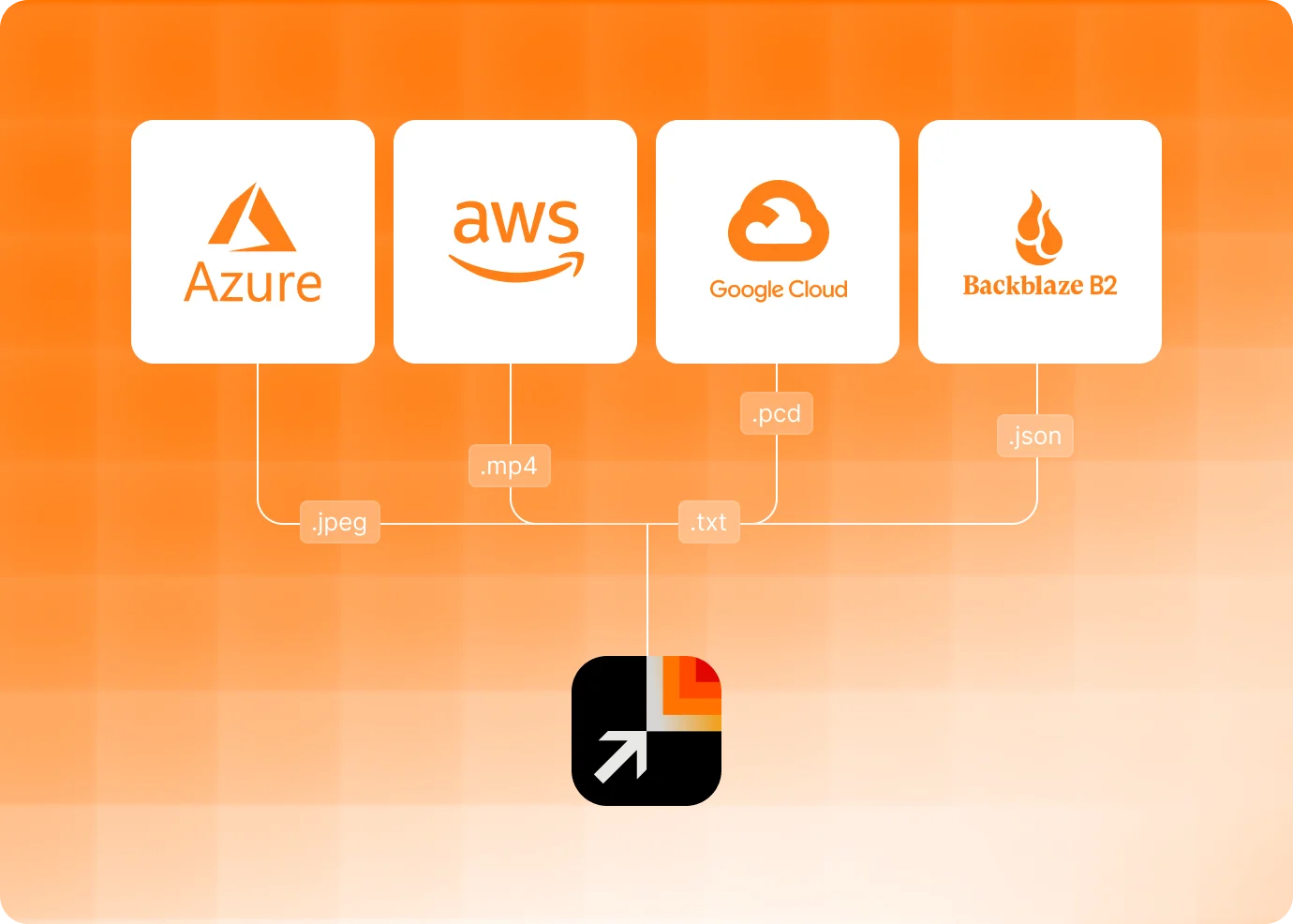
CVAT supports connected cloud storage including Amazon S3, Azure Blob Storage, Google Cloud Storage, and Backblaze B2, so recordings can be annotated from wherever the camera network already writes them.
How do you avoid double counting in dense scenes?
Counting errors come from broken tracks far more often than from missed detections. Track mode holds one identity across frames, and review stages plus ground-truth jobs surface the fragments and merges that inflate a total. It is worth deciding in the guidelines what counts as one object when freight is stacked or partly out of frame.
Can one taxonomy cover cameras at different sites?
Yes. Labels and attributes are defined at project level, so every site, camera angle, and shift annotates against the same schema. That matters more here than in most domains, because a model trained on one facility’s camera geometry usually degrades on the next one.
Can CVAT Labeling Services take on a multi-site programme?
Yes. The service covers project setup, workforce allocation, annotation, review, quality control, and delivery against your taxonomy and acceptance criteria — which suits rollouts where each new facility, camera angle, and SKU range adds volume faster than an internal team can absorb it.
Can operational footage stay inside our own environment?
CVAT Enterprise supports private-cloud and on-premises deployment, which is normally what operators need when yard, dock, and in-cab footage carries worker, customer, or contractual restrictions.